
How to Search Civil Dockets
Check the court named on your complaint, summons, notice, or judgment first. That single detail steers the whole docket search. For a Superior Court case, use the state directory. The Georgia Judicial Gateway E-Access directory sends Gilmer users to PeachCourt. Georgia Courts states a provider account is required. The public PeachCourt screen stops at a login gate. So plan on registering before any party search, filters, or Gilmer case-number pattern appears.
A Superior file may not show up. Call Amy E. Johnson's clerk office at 706-635-4462, or go to the counter. Magistrate civil matters go to 706-635-2515. Probate matters go to 706-635-4763. Non-online material can also be routed through a county open-records request. The county advises allowing at least three business days for research.
- Identify the court and civil case type from the filed paper.
- Use E-Access and PeachCourt for a Gilmer Superior case.
- Use the separate Magistrate or Probate office when it holds the matter.
- Compare the docket entry with the underlying filed document.
- Ask the custodian for a plain or certified copy when needed.
Gilmer Civil Docket Routing
Gilmer County splits its civil docket by subject and dollar amount. Superior Court takes the big matters. Think major civil disputes, divorce, equity, and fights over title to land. Magistrate Court covers claims of $15,000 or less, plus dispossessory cases. Probate Court holds wills, estates, guardianships, and conservatorships. City ordinance and citation matters go to municipal courts. Those courts keep no general city civil claims docket. The Appalachian Circuit county-courts page lays out this lower-court division, including the Magistrate threshold.
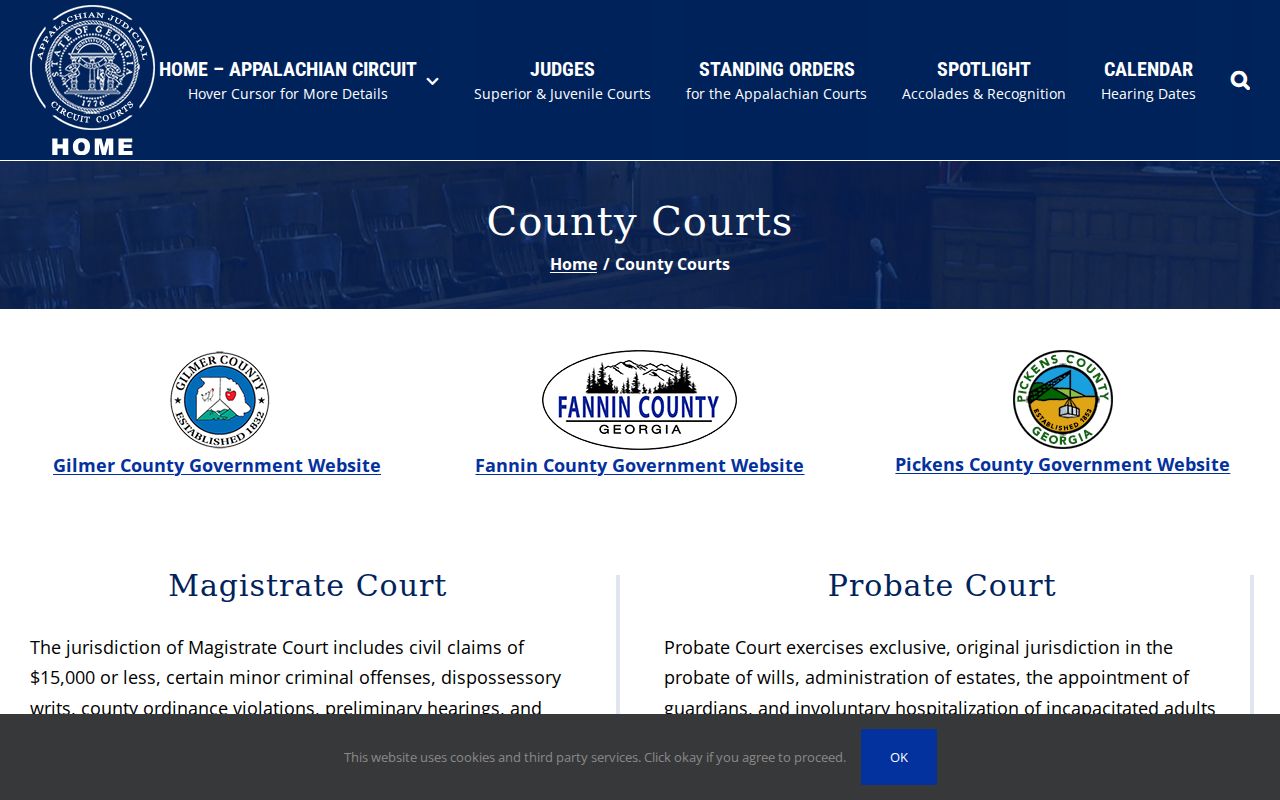
The map of courts prevents a common mistake. A dispute that looks civil is not automatically a Superior Court case. Picking the right court first spares you a failed portal search and a copy request sent to the wrong office.
What a Civil Docket Shows
A full civil docket lines up the case history by filing date. It names the parties and notes service. It lists pleadings and motions, records settings, and shows signed orders or a judgment. Gilmer County offers no open civil register without a login. So treat the exact public fields and abbreviations as unknown. The official calendar shows only the basics. Look for the date, the time, the G county letter, the CV civil code, a setting label, and judge initials.
| Case identity | Case number and caption when the authenticated register exposes them. |
|---|---|
| Parties | Plaintiff or petitioner and defendant or respondent. |
| Service | Issuance, return, and answer events when recorded. |
| Litigation | Pleadings, motions, notices, hearings, and signed orders. |
| Judgment | Final, default, agreed, dismissed, or other action only when confirmed. |
One caution: an index entry is not the case file. The complaint, answer, exhibit, or signed order may hold context the short docket text leaves out.
PeachCourt Gilmer Civil Documents
PeachCourt is the e-filing provider Gilmer Superior Court requires. Georgia E-Access names it as the electronic route for documents. Coverage differs from one participating court to the next. In some systems the images reach back to about 2005. Sealed records, adoption records, and proposed or unexecuted material are left out. An available document image runs $0.50 per page. A small convenience fee applies too.
Before any case search appears, you must register or sign in. The pre-login screen offers no controls for party, case number, date, case type, or status. So treat any promise of a free public register with doubt and skip wildcard tricks of your own invention. An electronic image may be missing. The Superior Clerk still supplies inspection, an older file, and certification for that court docket.
Types of Civil Cases on the Docket
Civil dockets in Gilmer County sit in more than one court. Jurisdiction decides where a case lands, not the name a party puts on the dispute. Superior Court takes the broad and exclusive categories. Magistrate Court handles the lower-value claims. Probate proceedings keep their own office and register.
- Major civil disputes, equity matters, and title-to-land cases in Superior Court.
- Divorce and other public domestic filings within Superior jurisdiction.
- Claims of $15,000 or less in Magistrate Court.
- Dispossessory and related Magistrate proceedings.
- Estates, wills, guardianships, and conservatorships in Probate Court.
No State Court of Gilmer County appears in any current official source. A docket search should not borrow the court structure of a different Georgia county. Municipal court records stay with the issuing city, unless an appeal or transfer moves a later filing somewhere else.
Reading Gilmer Civil Settings
The annual Superior Court calendar uses labels like G-CV NJ. The G stands for Gilmer. CV means civil, and NJ marks a nonjury setting. That label is a calendar category only. It is not a case number, a case status, or a judgment. The public PDF also leaves out the parties, pleadings, motions, and document links for the cases in that block. So a full court docket lookup has to go elsewhere.
- Complaint or petition
- The filing that begins the civil proceeding.
- Service
- Formal delivery of process, reflected only when the docket records the event.
- Motion
- A request for a ruling, not the ruling itself.
- Notice of setting
- A filing or entry that gives hearing information.
- Judgment
- The court's disposition, which should be read from the signed entry or document.
Disposition codes: Gilmer County publishes no civil disposition-code list. Read entries as plain descriptions and confirm any abbreviation with the clerk instead of guessing at its meaning.
Settings and Hearings on Civil Dockets
A civil hearing date can show up in two places. One is the authenticated Gilmer County docket. The other is the Appalachian Judicial Calendar. A civil Rule Nisi simply asks the court for a hearing or a required appearance. When a party files one, the request goes to the assigned judge. The judge may set the matter outright. Or the judge may send the party or attorney to the Superior Clerk to pick up a regular civil nonjury date. Anything expected to run more than two hours needs the judge's direct authorization.
Treat the yearly calendar as a planning tool. It carries no case-specific reset history. For the date that counts, check the docket, the assigned judge's office, the Superior Clerk, or counsel. The Gilmer County court calendar lays out each channel step by step. An unposted setting document can also be requested through county open records. That request will not force an instant calendar update.
Gilmer Civil Filing Context
Workload numbers and docket numbers answer different questions. A 2025 workload assessment covers the Appalachian Judicial Circuit. It puts the circuit-level civil average at 1,962 matters. That figure measures circuit workload used in the study. It is not a tally of Gilmer County filings. Treat it as context, never as a county case total.
The Georgia Courts data and statistics page publishes these resources and carries an important caveat. The figures are self-reported, the page warns. So the numbers sketch scale, while the clerk's register and the case file tell you what actually happened in a Gilmer civil docket.
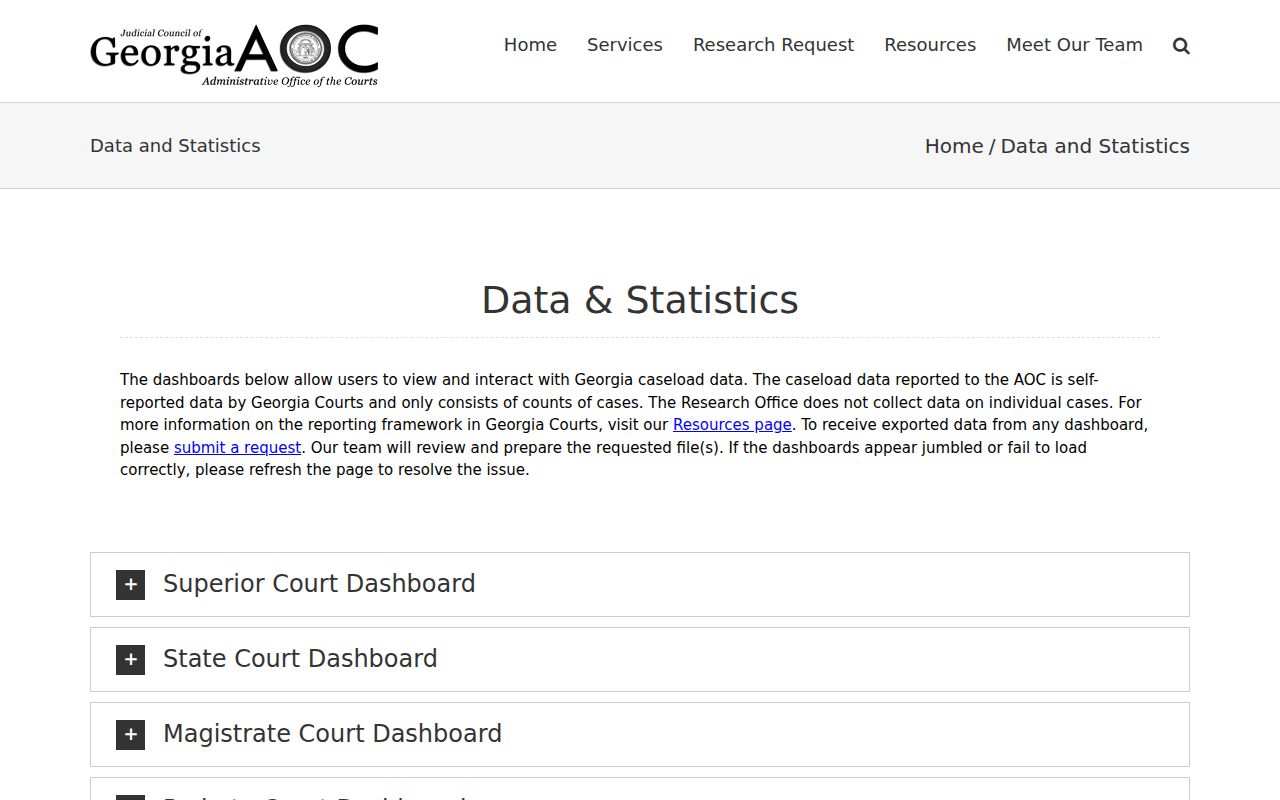
Statistics describe the court's overall size. A live docket answers the narrower question. For any specific Gilmer civil case, only the register and the clerk-held file reveal the entries, the parties, and the outcome.
Federal Gilmer Civil Cases
A federal civil case filed from Gilmer County never shows up in the Superior Court docket. Instead it lands in the Northern District of Georgia. That court assigns Gilmer to its Gainesville Division. PACER and the federal CM/ECF system handle those filings. Appeals go to the Eleventh Circuit. The Northern District court information page lays out the divisional structure, and access runs through an entirely separate system.
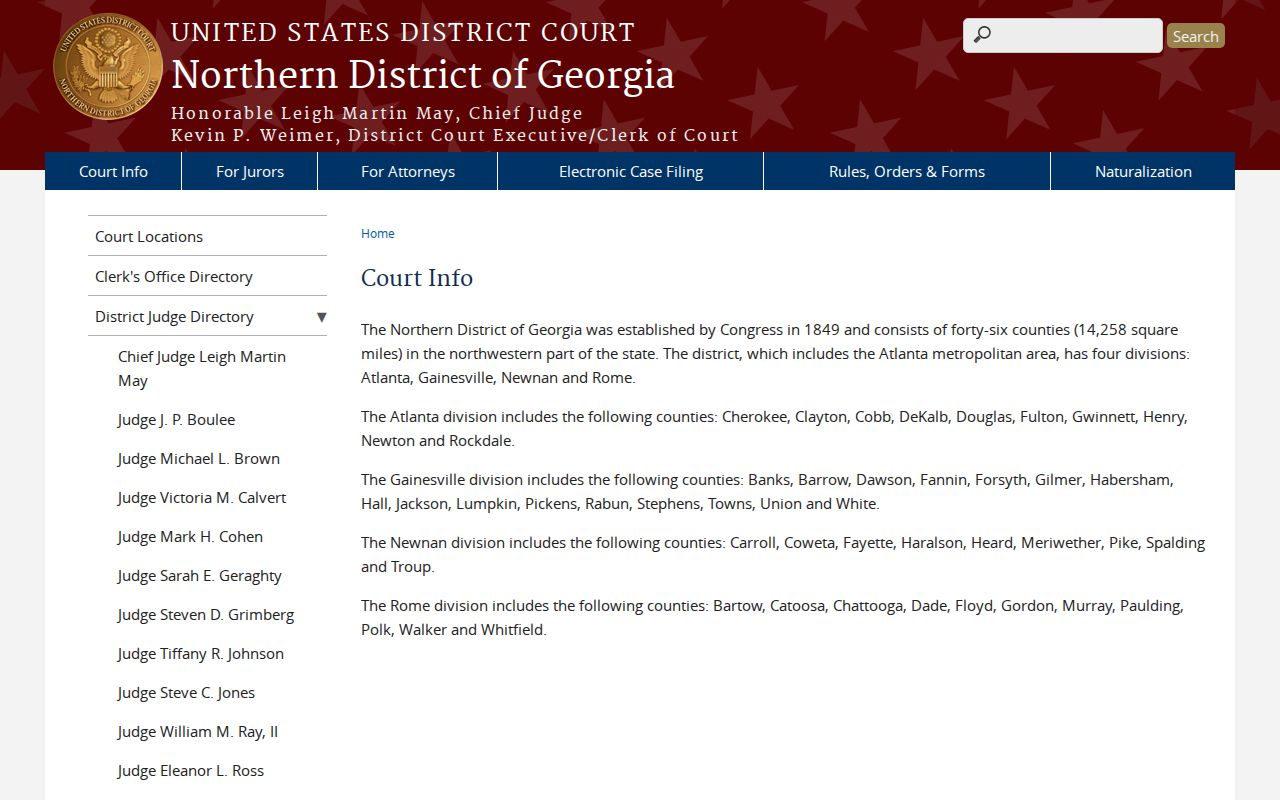
Check the caption before you pick a route. If the notice names the United States District Court, use the federal path. A county clerk cannot certify a federal docket. And PACER cannot produce a Gilmer Magistrate or Superior Court record.
Public Access to Civil Dockets
Georgia court records are open in general, with real limits. Uniform Superior Court Rule 21 governs public access. It also covers restriction procedures and protected identifiers. Uniform Magistrate Court Rules 5 and 20 cover that court's docket and sensitive personal information. The Georgia Open Records Act adds a public-record framework. Still, court rules and any sealing order control what a court file actually releases.
Access limits: A missing online result may reflect the wrong court, older paper material, restricted access, a seal, or material excluded by the provider.
Ask the custodian whether the file is public, redacted, not digitized, or held by another court before drawing a conclusion.
Call the right clerk's office, or go in person, if the record is not online. Ask about mail, pickup, and certification before you rely on one method. County open-records guidance gives you the first 15 minutes free. Copies run $0.10 per page, and the county advises allowing at least three business days. Those figures are county guidance only. They do not cover PeachCourt document charges or a separate certification quote from an office.
Gilmer Civil Copy Requests
Before you order anything, know the difference between a docket and the papers behind it. A docket shows that a complaint, answer, motion, notice, or judgment was entered. The filed image holds the actual language. A plain copy just reproduces the document, while a certified copy carries the clerk's authentication. Pick based on why you need the record. Let the responsible court quote the current certification charge.
For a Superior civil file, contact Amy Johnson's clerk office. Give it the court name, the case number if you have it, party names, an approximate filing year, and a narrow description of the document. PeachCourt can supply an electronic image for participating records. Its $0.50-per-page document price and convenience fee are not the county clerk's certification schedule. Chase older or missing images through the clerk. The clerk posts no public Gilmer Superior civil mail form. Nor is there an identification rule or complete certified-copy fee table.
Magistrate and Probate requests go to their own offices. A claim at or below the documented Magistrate threshold does not become a Superior record just because an online Superior search is convenient. The same goes for a dispossessory or a Magistrate judgment. Estate and guardianship material stays with Probate unless a specific appeal or transferred filing is confirmed. Municipal records stay with the city that issued them.
The Gilmer County open-records page gives the first 15 minutes free. It lists ordinary copies at $0.10 per page, and advises at least three business days. Treat those as county request guidance, not a promise for every court file. Seals, redaction rules, provider exclusions, and court-specific certification practices still shape a Gilmer County civil docket. They shape its documents too.